Introduction
When reviewing college applications, the job of the Admissions Officer is to take the resources provided by the applicant and assess the applicant's academic potential to make an informed decision on admission. One major resource that weighs heavy on the admission decision is the applicant’s transcript and grades. From these grades, the reviewer can gain a deep understanding of the applicant because of the standard set of scores collected over a long period of time.
In the application I submitted, I described how my High School grades did not fulfill their purpose in giving an accurate representation of me. This is because I did not apply myself due to my lack of intention of pursuing a higher education. After I decided that college would be a great choice for me, it was already too late, and the record had been set. Even though my High School transcript reports me falling short of meeting the requirements for admission into the University of Utah, I assure you that I am more than qualified. I would like nothing more than to come join the amazing students at the University of Utah in pursuing a computer science degree.
In this document I will be talking about many of my creative and educational projects. When working on these projects I give them “Operation” names, inspired by the Seal Team Six mission nicknamed “Operation Neptune Spear.” This adds meaning to the operation by assigning it a code name with meaning.
When cooking chocolate chip cookies, sometimes you get halfway through and realize you are missing a critical ingredient such as butter. This relates to me wanting to attend the University of Utah but not having and adequate high school or College transcript. In the cookie scenario the best thing you can do is substitute the butter for something that you do have that is just as good such as margarine. Because of this I will be giving this Admissions Appeal letter the nickname…
Operation Margarine
Growing up, I never wanted to finish school and attend college to get a regular job. I was given examples of people who dropped out of High School or College but were still able to become wildly successful. On top of that, I was also under the impression that college was just an extension of High School where you just sit and follow orders for seven hours a day. Given these implications, I had no desire to put effort into my schooling. Instead, I put my time and energy elsewhere.
Mobile Apps
A good transcript can show signs of dedication, consistency, resilience and aptitude. Throughout a semester you must constantly work hard to keep up your grade, even if obstacles are thrown in your way.
In eighth grade I was exposed to the Unity game engine. I taught myself how to use Unity along with the C# programming language and I developed a mobile game. The game I made was called Space Attack. I learned more as I was developing this game. Because of this some parts of the game were less good and later additions to the game were better because I was more educated. This became an issue because the older sloppy parts of the game did not play well with the newer parts. I solved this issue by completely starting over with the development processes using all the new knowledge I had acquired. I created a new version of my game, Space Attack HD. I had the game finished but it costs $100 annually to publish to the Apple App store.
Around the same time, my friends and I were talking about how cool it would be to have our own private social media app. I decided that because I had experience in making Space Attack HD, I would be able to make us a social media app. This sounded easy in my head, but there were complications I did not foresee. One of these issues was that we had to have a server for online functionality. To overcome this issue, I found YouTube videos about creating a TCP/UDP game server using C#. I made the server, and I hosted it on my computer. I learned how to do all kinds of server and port forwarding stuff from playing with Minecraft servers.
I now had these two apps but if I wanted people to be able to download them, I had to pay apple $100. I did not have this money, so I immediately started working for my dad. I then came up with a simpler plan. I decided to have ten of my friends each invest $10 into the app. They would have partial ownership, and I could pay Apple to put it on the App Store. This worked perfectly and I could publish both apps, or so I thought. I did not know this but apparently you must use macOS to upload apps to the App Store. I did not have a Mac, nor did any of my friends. I found out that I could run macOS virtually on my Windows machine using virtual machines. I downloaded all the necessary software and did all the setup, but the virtual machine did not work. I found out that the Intel CPU my computer used did not support virtualization. Because of this I had to work out a deal with my dad to borrow his computer for the upload process.
After days of tinkering with the VM, macOS, the Apple Keychain, and Apple App Store Connect, I was finally able to submit my apps for review. I rented an AWS EC2 instance to host the social media app server. Right when I thought my troubles were over, Apple’s app review system came to ruin my day. Any app developer can tell you how strict Apple’s review process is for new apps. After many fixes and iterations, I was finally able to get Space Attack HD uploaded and approved. For my social media app, Apple did not like that I was publishing an app that only my friends could use. This app was never approved but it’s okay because I did not give up and there is more on that later.
The simple task of creating and uploading an app to the App Store proved to be much more difficult than it appears at first glance. After I fixed one issue, a new one presented itself. Because I set my mind on making these apps, I was able to overcome each step one at a time.
In junior high I started developing a mobile game using the Unity physics engine and I also worked on a social media app for my friends and me. I learned a lot while creating these projects and I overcame a lot of difficulties. In the end I was able to have a great mobile game to share with my friends and family.
Things I Learned
- Unity
- C#
- TCP/UDP
- Client-server architecture and networking
- Virtual Machines
- AWS EC2 basics
- macOS / App Store toolchain
- Collaboration & stakeholder funding
Traits Shown
Dedication:
I kept working on my projects even when the process turned out to be harder than expected. I learned new tools, fixed problems, rebuilt my game from nothing, and pushed through Apple’s strict review process.
Consistency:
I showed up until the end to keep improving my projects, whether it was writing code, debugging issues, learning networking, setting up servers, or dealing with Apple’s uploads. I did not stop working until each piece was completed.
Aptitude
I went from knowing almost nothing to teaching myself everything I needed to know about how to complete my projects. When a problem popped up, I did not give up, and I strived to find a solution.
Supporting Media
This is a video of gameplay from my Space Attack HD game.
This is the profile view page on my social media app I made. It is clear that I am not a graphic designer.
This is an ad I made for my game. It showed gameplay while an AI voice told Reddit stories.
Dollar Hubs
As stated earlier, good grades can show an applicant’s ability to quickly grasp new concepts and learn as they go. This is because when looking over a transcript you can see how the applicant performed in a wide variety of classes and programs.
After making my mobile apps, I wanted to expand my knowledge on software development in new areas. I had lightly touched on front end development by making the user interface and logic of my social media app. I had dabbled in physics-based game development with Space Attack HD. I also experimented with back-end development with the server for my social media app. At this point I had only used C# and Unity. In my sophomore year of high school, I decided that for my next project, I wanted to learn front and back-end web development. I also wanted to learn about APIs so that my web app could communicate with other third-party programs.
I settled on making a website called DollarHubs.com. For this website I wanted users to be able to pay a dollar and then receive a reward. I had no idea how to accept payments, so I had to research it. I found out that you can use the Stripe API to add an Apple Pay button to a website. I set up an Apache2 server to host my website and implemented PHP code to handle the server-side API requests to Stripe. Now that I had the payment down, I had to provide a reward. My first thought was adding a page where the user could input a prompt to generate an AI image. I used the OpenAI API to implement this feature with their DALL·E 2 model. The images cost about $0.10 to generate so I was turning a profit with this website. Later, I decided this was not the best, and I wanted to change the reward.
My dad is a Data Analyst for the University of Utah Health Plans and on occasion he would show me the database language that he uses called SQL. Because of this, I wanted to learn more about SQL databases so the new reward for DollarHubs.com had to include database functionality. I came up with an idea where I would have a bunch of information about niche topics stored in the database and when a user paid a dollar it would randomly grab one of these topics for the user to learn about. This worked great and I shared a link to my website to my classmates, and everyone thought it was awesome.
When creating this site, I learned more than I thought I would. I learned about HTTP and HTTPS web traffic. I learned how to get an SSL certificate for my site so that I could use secure protocols. I learned how to set up and access SQL databases using a MySQL server. I also explored the use of private and public API keys for services like Stripe and OpenAI.
In total I made around $20 with this website so it is safe to say that the driving factor in doing this project was not money. I just wanted to learn more about different aspects of software development. I had to persevere through complications with setting up this website and learning Linux, but it turned out to be very educational in the end.
After making my mobile apps, I wanted to expand my software development knowledge beyond Unity and C#. My new project was a website called DollarHubs.com. I wanted to experiment with web development, third-party APIs, and SQL databases. I made a website where you can pay $1 using the Stripe API and then you are rewarded. The reward started as the website giving the user the ability to generate an image using OpenAI’s API. I later changed the reward to have the website give the user a random lesson on a niche topic using data stored in a database.
Things I Learned
- Web development (HTML, CSS, JavaScript)
- Backend web development with PHP
- Understanding of HTTP and HTTPS.
- Apache2 web servers
- Linux configuration, file management and permissions
- SSL certificates
- OpenAI API
- Stripe API
- SQL language
- MySQL databases and servers
Traits Shown
Aptitude:
I had to learn how to develop a web app from knowing nothing. I had to figure out problems with things not working because a secure connection is required. I was able to understand the desired result that I wanted and work on learning how to get there.
Creativity:
With this project I was able to learn so much from such a simple goal. I was able to take advantage of the resources at hand and put them together to fit my satisfaction. I created a fun tool for accessing short lessons on niche topics that interested me.
Plitz Party Game
After the success of my Dollar Hubs project, I decided I wanted to take what I learned and create another mobile game. This time I did not use the Unity physics engine. This app instead used Microsoft's .NET MAUI to create a cross-platform native UI app. Luckily, this framework still used C#, so I was able to go into it with familiarity. I wanted to make a party game where a group of friends could join a party and play minigames. I called it Plitz Party Game. The idea was to take what I learned from using the OpenAI and Stripe API and use it to create my own API endpoints for my app to use for communication with the server. I also wanted users to be able to upload media for profile pictures and game inputs.
For a few of my minigames I wanted the user to be able to draw pictures. I found a package for a drawing input component and put it in my app. It did not work. I did a lot of digging and I found out that the package that I installed had an incompatibility issue with the version of .NET MAUI I was using. Because of this I reverted to an older version. This created issues with other packages I was using. In the end I decided to alter the package myself and change it so it would work with the version I was using. This worked out great and the drawing input component was added.
At first, I was using a MySQL database to store all the players’ data and game states. This was slow and caused a lot of lag. I experimented with a few things and found out it was way more efficient to store game data in system RAM instead of a database. I did not store it in RAM at first because of two reasons. I thought that the game data would take up too much space and the server I was renting only gave me one gigabyte. The other reason is that I was already familiar with SQL databases from my previous project. I found out that my game data did not take up much space at all and that if I got a lot of users, I would be able to afford to pay for an upgraded server. With this in mind I completely rewrote how the games and functionality worked to allow the game states to be saved in RAM and for more permanent data to be stored in quick local JSON files.
One other major issue my app had was that the UI would lag when the app would communicate with the server in the background. I did not know this at the time, but it turns out that I was processing the UI and logic on the same thread, causing blocking and lag. Before I discovered this, I optimized the functionality of the logic and UI as best I could. After this I rewrote all the app’s server logic to process incoming and outgoing requests on a separate thread. This solved all the lag issues.
I published this to the App Store using the same Mac VM method I used for my other apps. I had all the common complaints that Apple app reviewers make in my mind while developing the app, so the review process went a lot smoother. I added a monthly subscription that offered premium features and the ability to invite AI friends to your party to play with you. The AI friends used the OpenAI API just like my last project. The app let you upload a profile picture for them and input character traits so that the AI could form a personality. For some AI functionality the OpenAI API was not enough so I took advantage of Google Cloud and used the Google Gemini API as well.
I researched monetization strategies and tested a free trial model. However, I realized that this was relying on users forgetting to cancel their subscription. This felt predatory and aligned with 'dark pattern' UX design. I value ethical software development, so I refunded those users. I decided that it was pathetic if you cannot offer a service that people are willing to pay for, so you bait them into subscribing against their will. After refunding these people I took down my app.
With creating my Plitz Party Game I learned a lot about app development. I learned about optimizing your apps by using tools that make sense. In the future I would never use an SQL database to store temporary game data. I also learned how to make HTTPS endpoints using the Python Flask framework. I also learned about the consumer of the apps I make. People do not care if I have spent a lot of time creating an app. They will only use it and pay for premium features if they genuinely enjoy using it or if it adds value to their life. These are good notes that I can use when creating my next project. My app was fun, but the games were short and not extremely original. I now look at this app as another great learning experience, just like my other projects.
While this game did not make me a billion dollars, I did learn a lot and received a lot of great feedback from my family. One example of this is my dad’s reaction to it. When I told him I was working on it, he would occasionally ask me to show him updates on the development. He thought it was cool and liked that I was using SQL just like he did in his job. A ton of people may not have downloaded it, but my family did and we enjoyed playing many games together. That made it all worth it to me.
After learning how to take advantage of third-party APIs, I wanted to make my own. My next project was a mobile game called Plitz Party Game. It was a game where a group of players can join a lobby and play minigames. For this project I learned to use the .NET MAUI framework.
Things I Learned
- Full stack app development
- UI design
- Multi-threaded processing
- How to create API endpoints
- Python Flask framework
- Handling media uploads
- Client server authentication
- JSON files
Traits Shown
Resilience:
When developing this app, I started making it in Unity and then moved to .NET MAUI because it was a better suited framework. When installing packages to use in my app there were compatibility issues that I had to solve. I worked past these issues and was able to develop a great project.
Creativity:
After learning about the OpenAI API I implemented AI friends into my game in a way that no one has ever done before. While some games were heavily inspired by other people’s projects, I added my own twist to each game to make them better and unique. I also added games that I came up with on my own. In the end I was able to make a game that was fun to play with my friends and family.
Honesty:
When I realized that the way people go about monetizing apps like this one was dishonest, I refunded the people who it affected and removed my app from the App Store. I could have just slightly altered the monetization strategy, but I instead decided that it would be best to make another attempt at making a game in the future using what I learned from this one.
Supporting Media
This is a video showing the UI of my app.
This is a video showing the Python code for the Plitz Party Game server. It has a total of 15,924 lines.
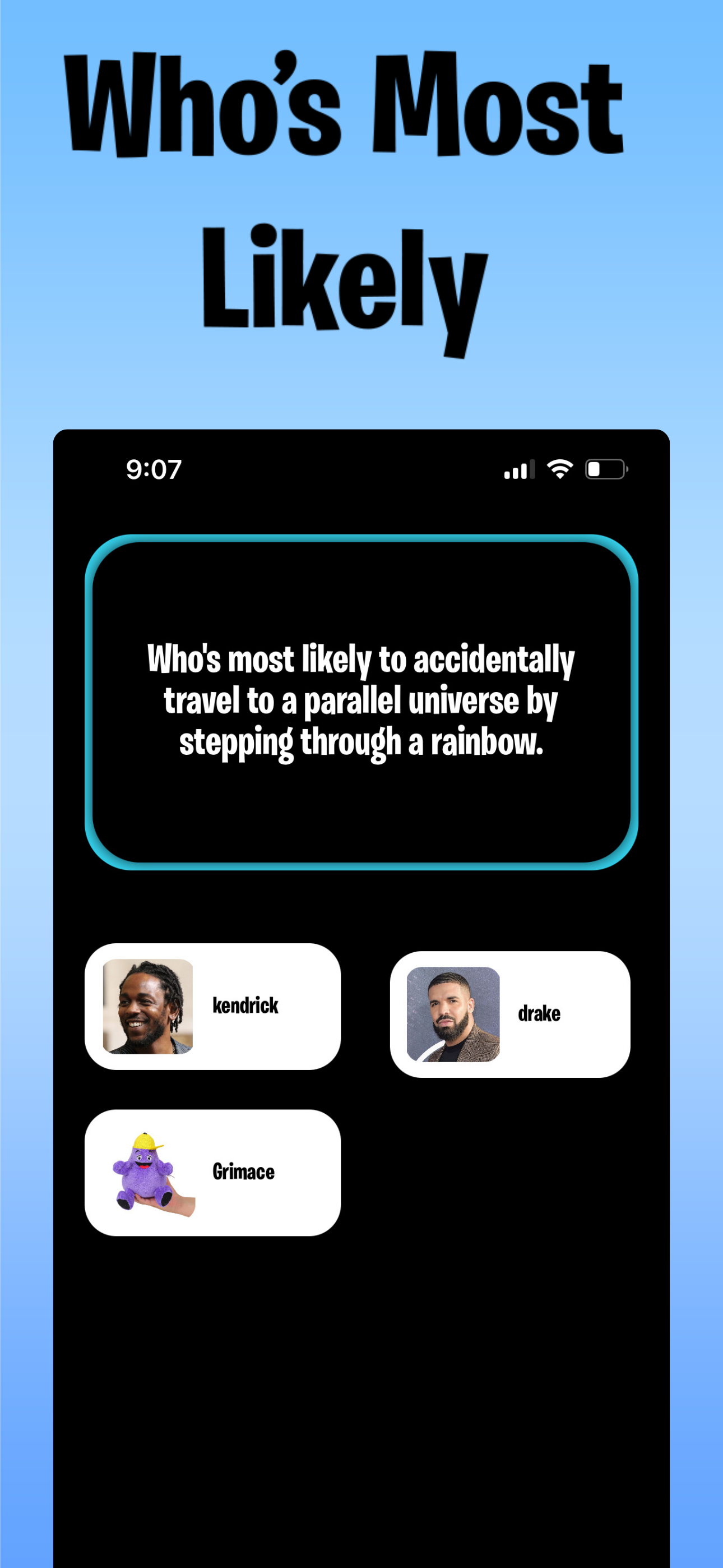
This is one of the minigames called: Who's Most Likely
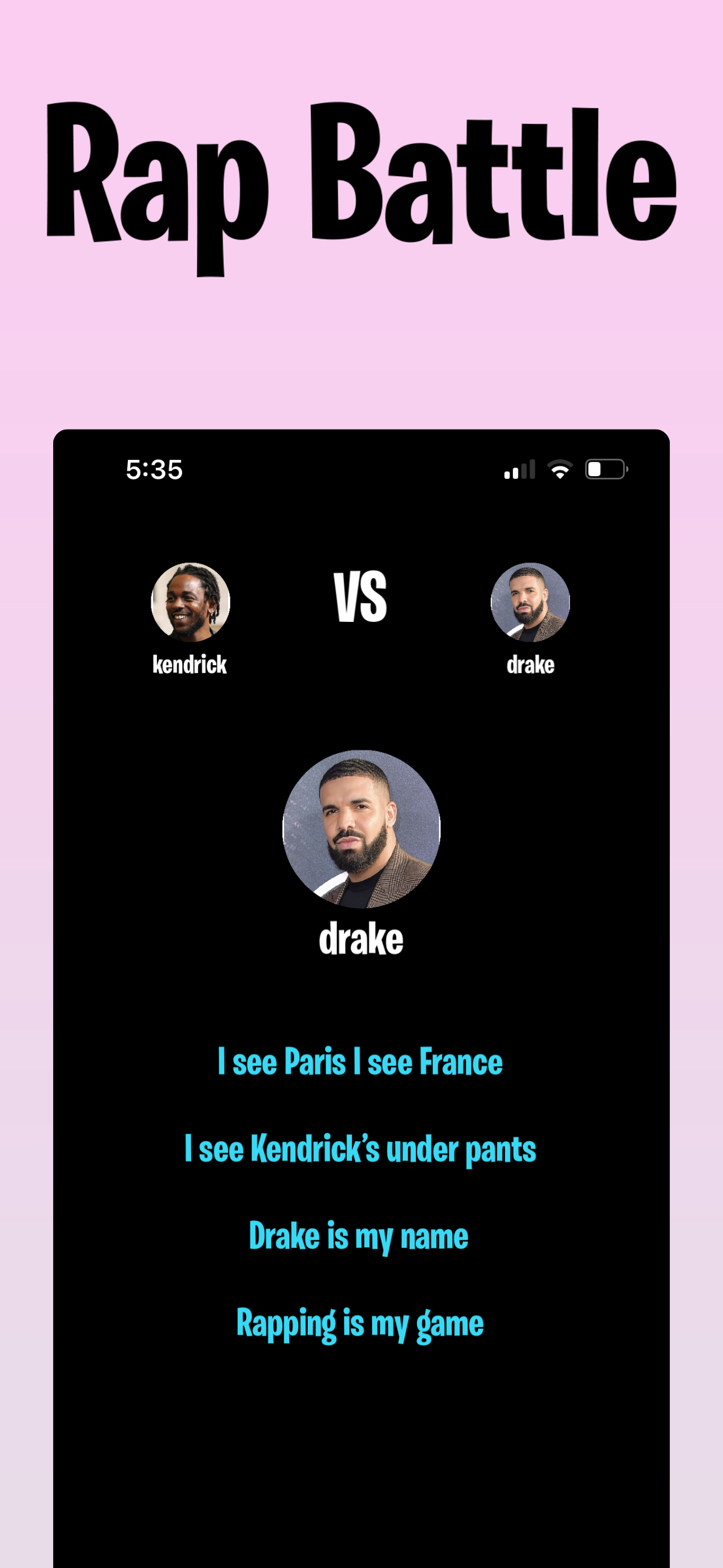
This is one of the minigames called: Rap battle
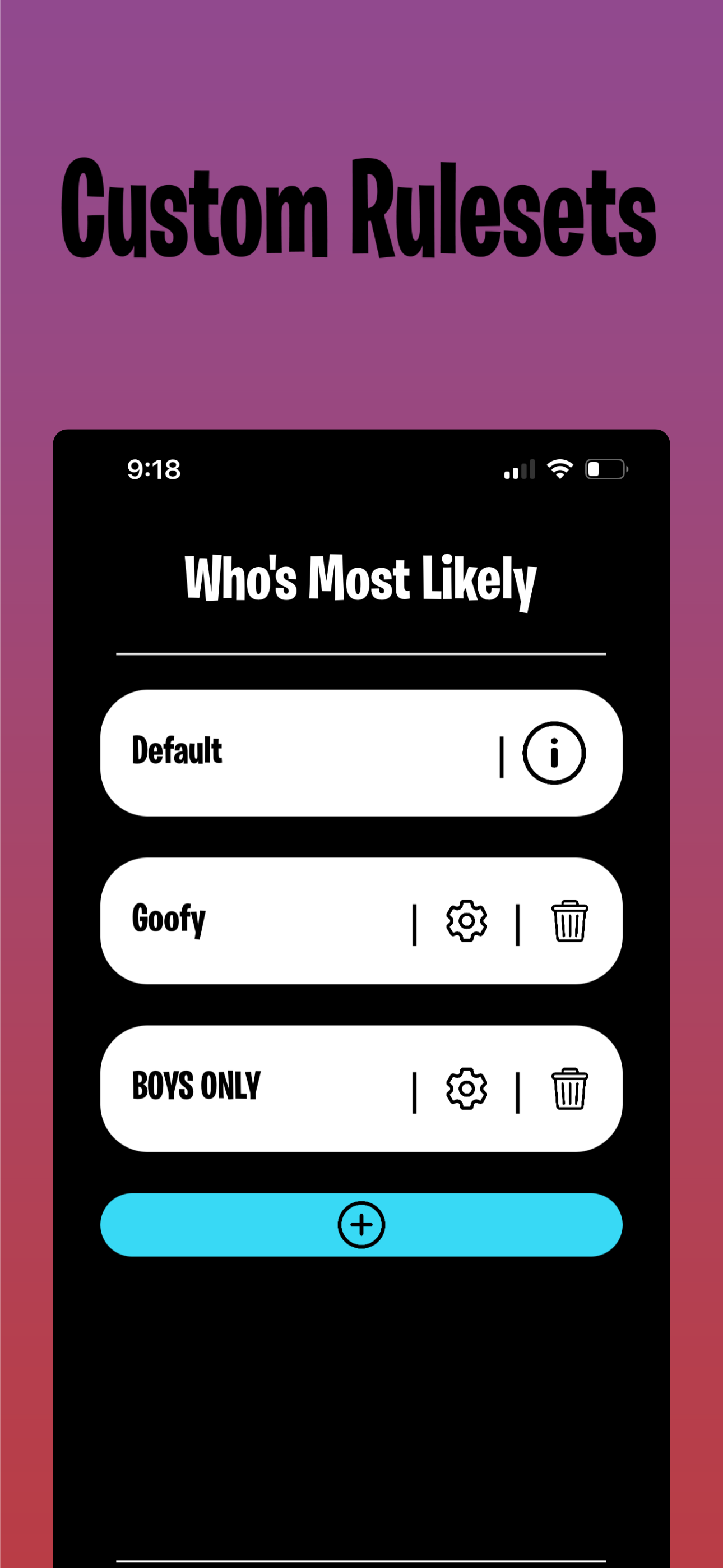
This shows the customization options for games in the app.
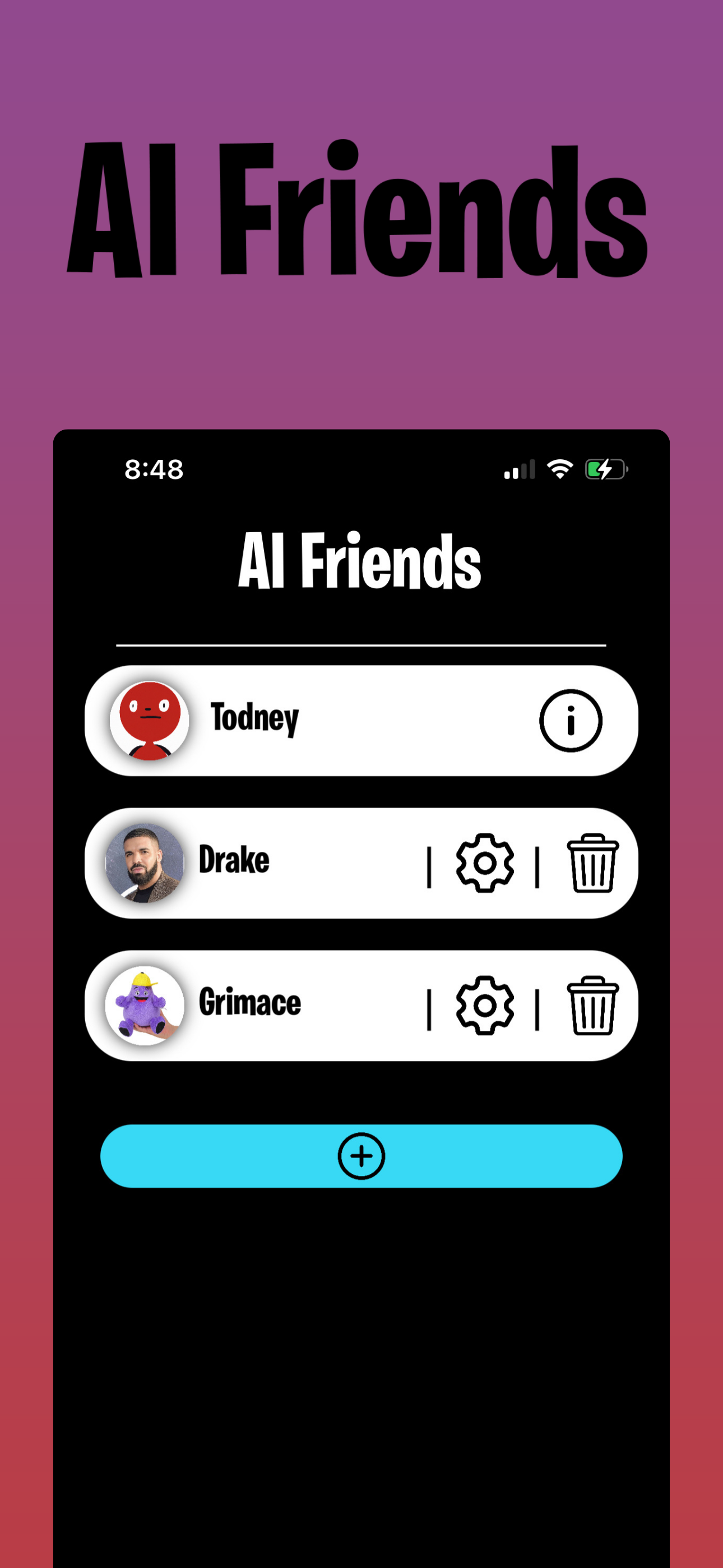
The image above shows the AI friends you can play with.
Christmas Presentations
These next set of projects may seem like a stretch, but I reassure you that they are a great insight to my ability to be consistent and dedicated. It also illustrates my ability to be creative and entertain. Ever since I was a wee lad I have loved to entertain. Nothing makes me happier than seeing people experience enjoyment over something that I created.
Every Christmas season, my friend group and I would have an event a few days before Christmas where we would all make a presentation and share it with everyone. It did not have to be Christmas related, it just had to be funny, cool, or just entertaining. After presentations, we would all vote on who’s was best. We did this for three years, and I won all three years. We were a group of ten so if the winner was selected at random, my chances of winning all three years would be one in one thousand, or 0.1%. This shows that there was more going into selecting the winner than just random chance.
My friends claimed that the reason I won each year is because I spent more time and worked harder on mine when compared to them. This is consistent with my narrative because my friends were putting in much more time in their schoolwork instead of their Christmas presentations. This is evident because a few of them were promised big scholarships and were admitted into the colleges of their choice.
It sounds like a simple task, but creating a Christmas presentation that appeals to everyone can prove to be quite difficult. One common strategy was to make fun of everyone and talk about inside jokes. This could be good, but I did not want to be on anyone’s bad side so that I could maximize votes.
I had to work hard and persevere to keep my winning streak each year. By winning I had placed a target on my back and by the third year many of the presentations were made entirely to target me. I had to outwork my friends and understand what would be appealing to them to make sure I got their vote even though they were frustrated with my constant winning.
Every year in high school, my friends and I would get together a few days before Christmas and show presentations that we had made. We then voted on which one was best to find out who won. To win, you had to outwork everyone else and win over the majority of votes. I won all three years.
Things I Learned
- Storytelling
- Audience and social awareness
- Planning and execution
- Expanded on my Adobe Premiere Pro experience
- Card printing
Traits Shown
Creativity:
I was able to keep my audience engaged and entertained. I formulated stories and games that were captivating and innovative. I used different forms of media to bring my presentations to life.
Dedication:
I worked hard on my Christmas presentations because I wanted to win and I liked the respect that came from delivering a quality presentation. I gained nothing of monetary value from winning, the only thing motivating me was pure love for the game.
Consistency:
I won every year for three years. There were ten of us so, if the winners were selected at random, my chances of winning all three years would be 0.1%. This shows that there was more going into selecting the winner than just random chance.
Supporting Media
This is a cut up version of my latest Christmas Presentation featuring my friends reactions.
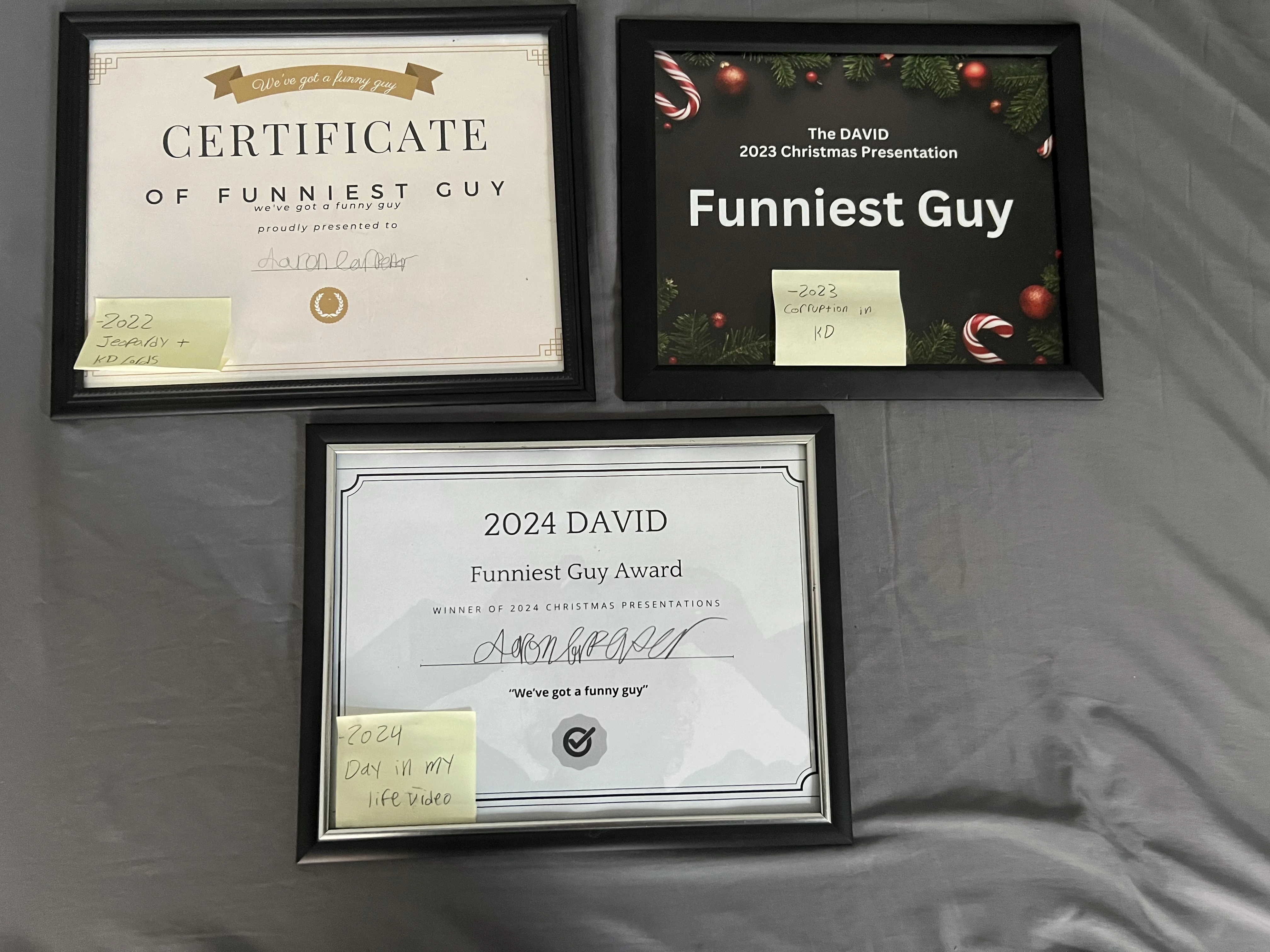
These are the certificates I received for winning each year.
Y Social
Every year in high school, my friends and I would invite a large group of people to a party to celebrate Presidents’ Day. At these parties, we would have two people running for president. The two candidates would create propaganda and different forms of media to slander each other. This would all lead up to the President’s Day where we would then have a debate and an election.
For Presidents’ Day 2025, I thought it would be cool if we had a place where we could post our thoughts and media in a way that mirrors real life. In real life politicians use apps like X and Truth Social to push their rhetoric and propaganda. I thought that because I had made a similar social media app in the past, that I could make us an app to use for Presidents’ Day. I started development and I called this app Y because it was a clone of X.
I got this idea late, and I wanted to have the app ready so that we could use it plenty before the election. I did not want to put all the time and effort into this app if we were only going to use it for a short period of time. Because of these constraints, I decided to speed-run developing Y. I built it piece by piece and sent my friends screenshots and videos displaying the progress.
When creating this app, I was able to make it fast because of all the experience I had accumulated over the years. I made the app in .NET MAUI just like my Plitz Party Game app. I took advantage of what I had learned and used fast JSON files to store posts and account data. I used the Python Flask framework to create API endpoints for my app to use to communicate. I rented a Linux server and hosted the APIs there. I bought a domain and enabled HTTPS so that it would comply with Apple App Store requirements and use secure communication. Because I had experimented and learned all these elements of software development, I was able to finish developing this app incredibly quickly.
When publishing my app, I still did not have a Mac, so I created a macOS VM just like I had done in the past. When getting the app approved, I ran into the same problem from earlier where Apple did not like that it was just for my friends. I got around this by inviting all my friends to join my Apple Developer account and I distributed the app to them as testers. This way I could have a select few people have access to my app. Everyone was able to download it and share videos, pictures, and text just like X. My idea had become a reality.
Because I developed my skills, I was able to take what I learned to apply my creativity for a real-world purpose. I was able to go from planning to release in a very short amount of time. This is my most recent project, and I am excited to get started on my next one.
For my extended friend group annual Presidents’ Day party, I created a clone of the social media platform X called Y. We needed this because at the party we had two people running for president. The creation of Y gave us a place for the candidates to post their rhetoric and build up support. We used this app to post text, pictures and videos.
Things I Learned
- How to manage a project release schedule
- Lightweight, fast Data Storage using JSON
- How to use my prior knowledge to improve efficiency
Traits Shown
Good work ethic:
I came up with this idea while Presidents’ Day was getting close, so I had very little time to develop the app if I wanted us to be able to use it in the weeks leading up to the party. I planned a schedule and stuck to it so that I could finish developing this app in time.
Aptitude:
I was able to solve problems that I had been facing for a long time. When I was working on my first social media app, Apple would not approve it because it had a private user base. This was an issue again, but I found a way to work around this and allow my friends to download my app.
Creativity:
I was able to take a fun idea and turn it into a reality using my knowledge and skills.
Supporting Media
This is an in progress video of the Y user interface.
This is a video showing the Python code for the Y server. The video also shows the Python script for the JSON storage system.
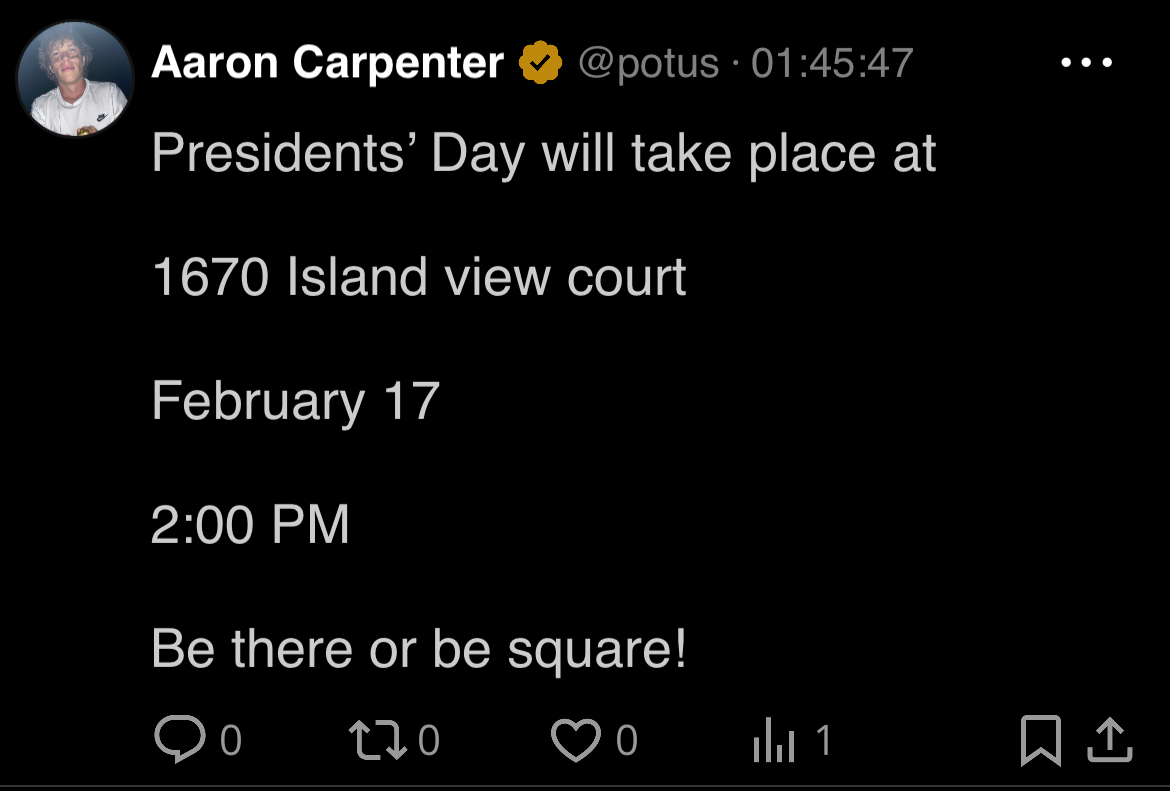
This is the post that I made to announce the details for Presidents' Day.
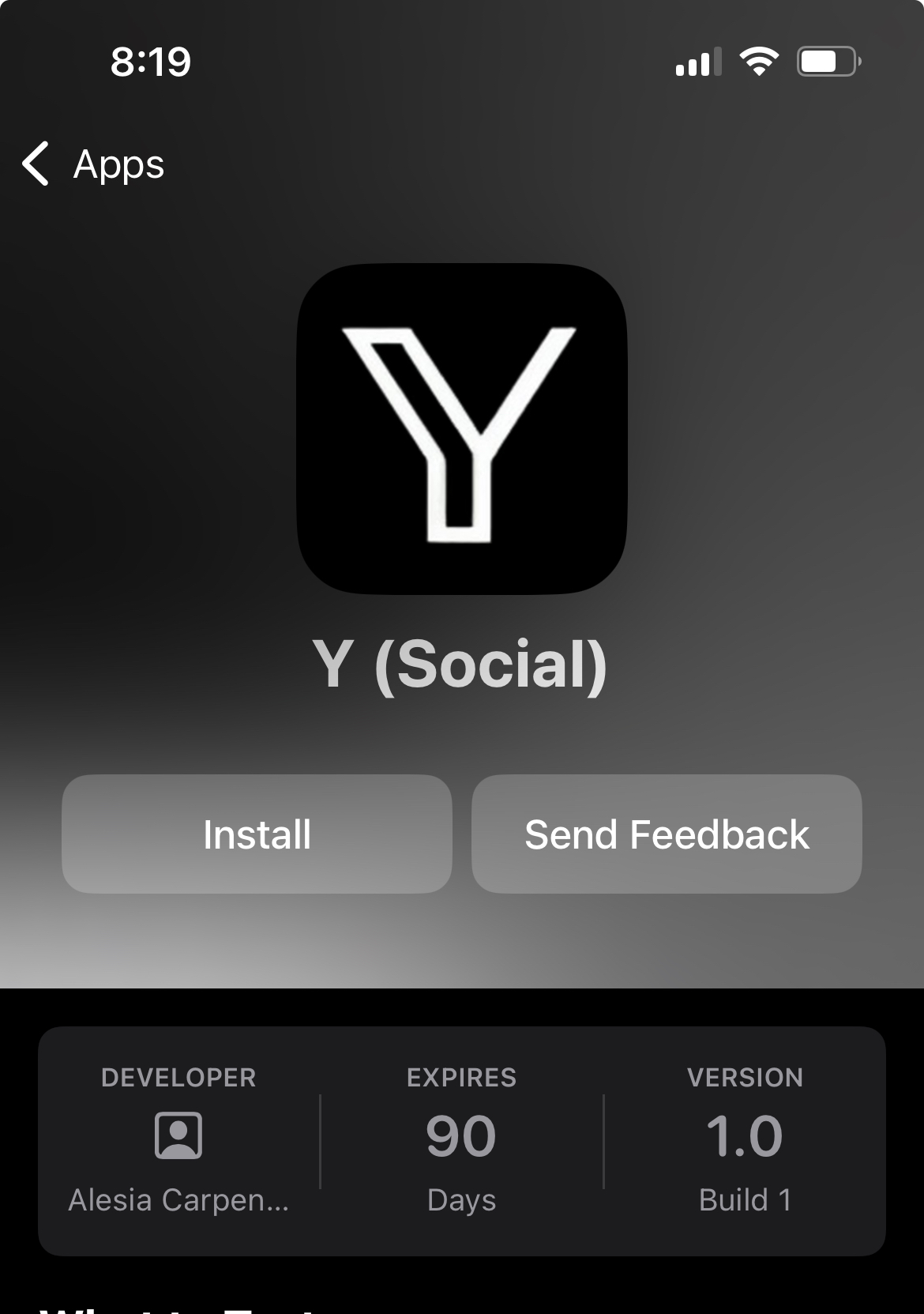
This is a screen shot of the Y app inside of TestFlight where my friends could download it.
Conclusion
A transcript offers a great way to judge an applicant’s eligibility for admission. This is because it is a long record of academic performance. The good marks can indicate a student’s good work ethic and dedication to their academics. It can be an indicator of good resilience and aptitude when it is shown that a student has done everything they can do to preserve their good grades. These transcripts are great for Admissions Officers to be able to gauge a student’s future potential at the given university.
In my document, I showed that I do have displayed these desirable traits, and I do have what it takes to be admitted into the University of Utah. I would not have stuck it out with all the issues that came up with my projects if I did not have a passion for creativity and growth. I proved time and time again that I was dedicated to achieving success in everything that I did, from winning Christmas presentations to creating fun games to enjoy with my friends and family.
I believe that I have shown that I have potential that can be unlocked when given the right resources to grow. By investing in my projects, I was able to develop my skills quickly and make better products each time. By attending the University of Utah I hope to unlock more potential and develop myself and my skills further.
Thank you for your time and consideration. I understand that the University of Utah receives many applications and it is a very competitive program. I hope that I have shown that I am a motivated and capable applicant and that I strive to be creative and to develop my skills. I know that providing a good transcript is more traditional, but cookies are just as good when the “butter” is substituted for “margarine.”